
Best Apps to Practice Speaking English with Real People (Not AI)
AI tutors have gotten remarkably good. They're patient, available at 3 a.m., and they never judge your accent. Yet plenty of learners still freeze the moment they have to speak English with an actual human.
Part of the reason is that speaking practice is only half about grammar. The other half is holding a conversation under a little pressure, with someone who reacts: laughs at the right moment, looks confused at the wrong word, and cares what you're saying. No chatbot can fake that, which is why the apps below all connect you with people rather than models.
Why AI tutors fall short
AI is a brilliant practice partner and a poor practice audience. It can drill vocabulary and correct your tenses, but it can't be genuinely surprised, can't share a real story back, and can't make you feel the small, motivating thrill of being understood by another person. Language is social. Take the human out and you remove the very reason most of us push through the discomfort of speaking.
"Language exchange" vs. "friendship with a language bonus"
There are two kinds of apps here. Language-exchange apps pair you explicitly to trade languages, which is efficient, but the relationship can feel transactional and fizzle once the "lesson" ends. Friendship-first apps connect you with people you actually like, and the language practice happens naturally as a side effect. The second kind tends to last longer, because you keep talking for the friendship instead of the homework.
The best apps, compared
HelloTalk: the language-exchange standard
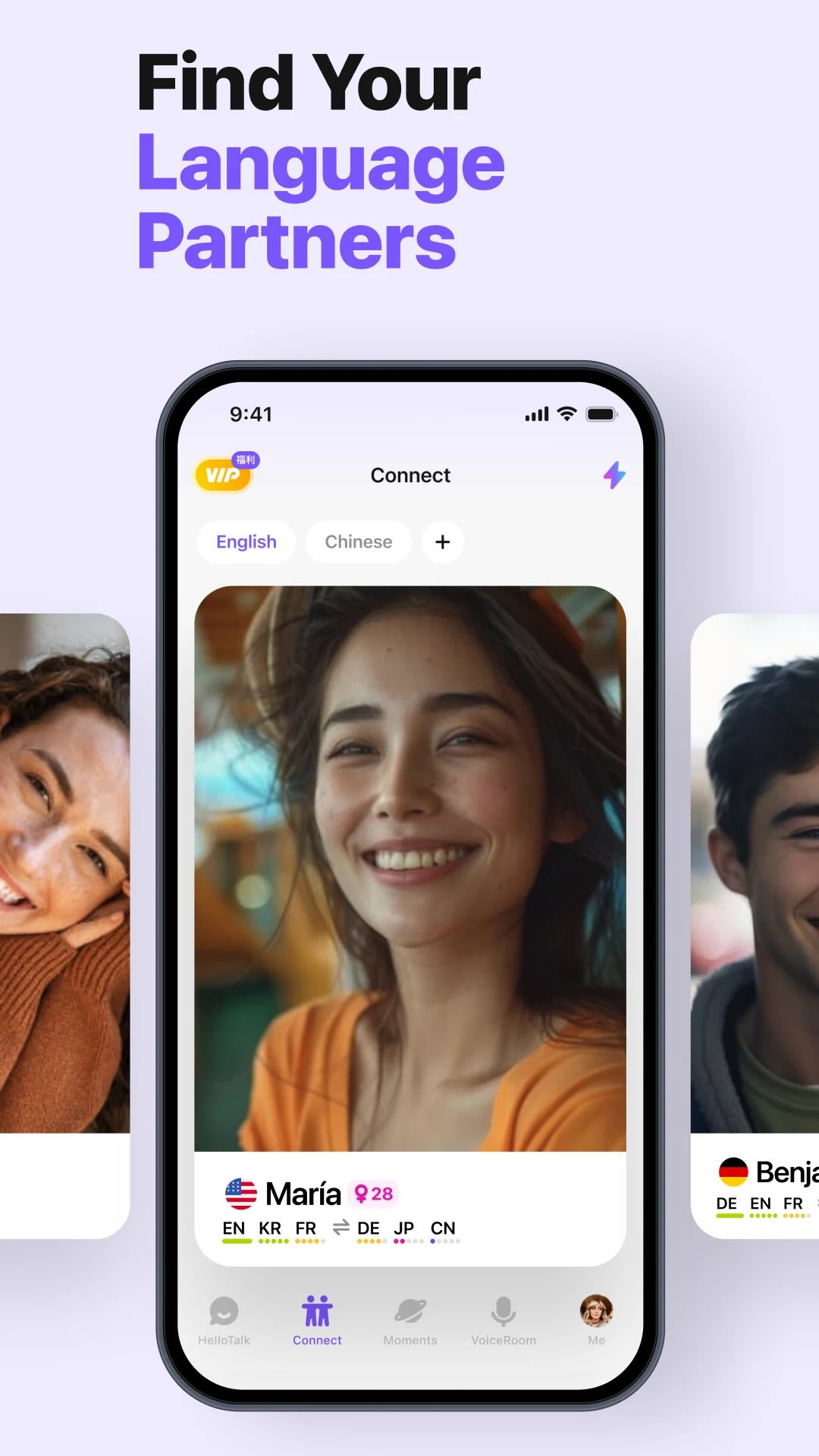
HelloTalk
Huge community, built-in correction tools, translation, and voice features. The go-to if you want a structured exchange and lots of partners to choose from.
Best for: serious, structured language exchange.
Tandem: curated exchange partners
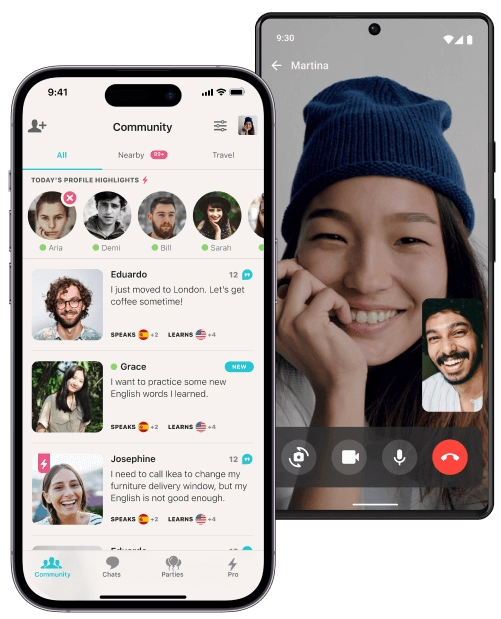
Tandem
Similar to HelloTalk with a more curated feel and tutoring options. Strong matching and a polished experience.
Best for: exchange partners plus optional paid tutoring.
Speaky: simple, free, community-driven
Lightweight and easy to start with. Good for quick text-and-voice practice, lighter on advanced tools.
Best for: a no-friction free option.
Bubblic: friendship first, English practice as the bonus
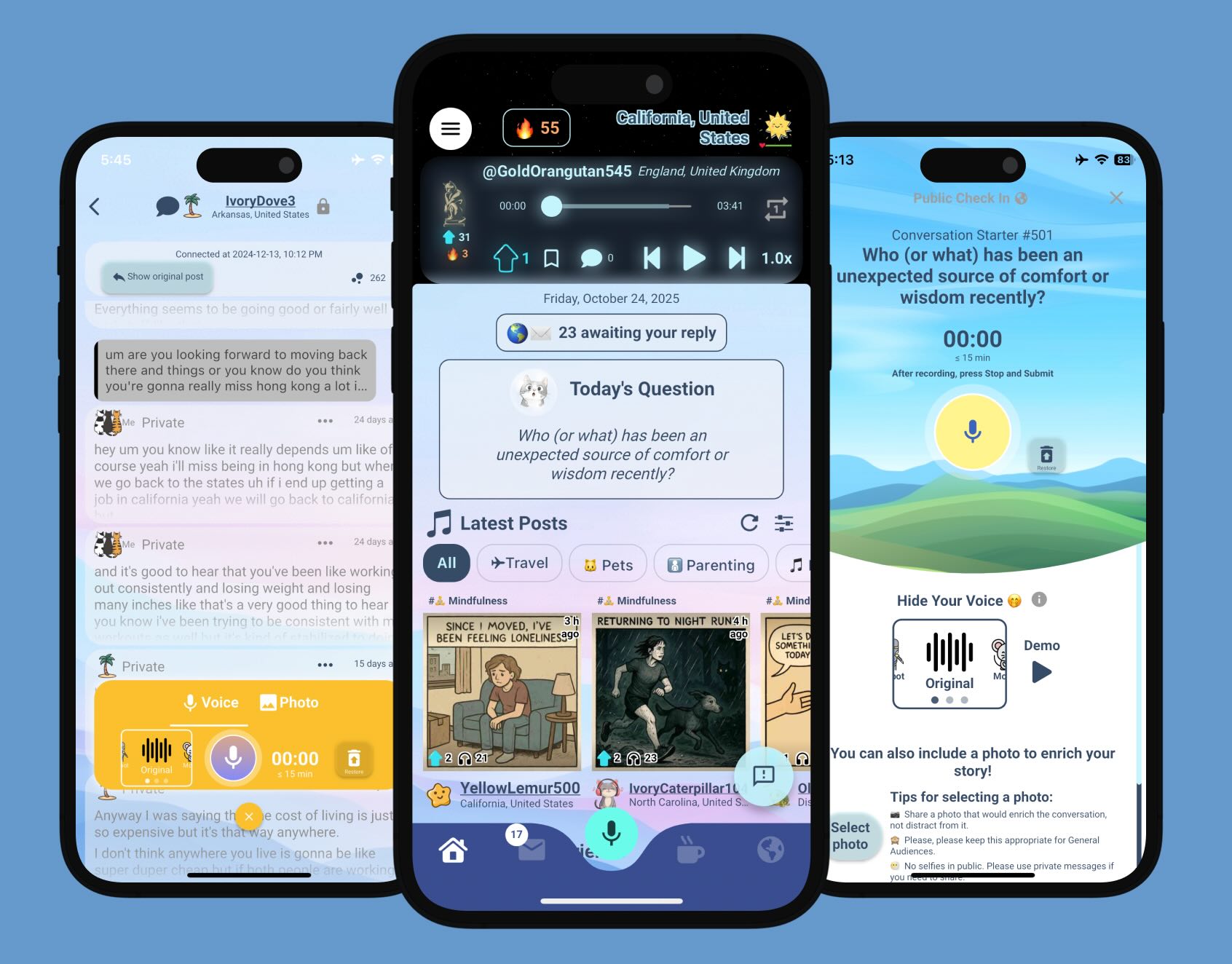
Bubblic
Bubblic isn't a language app at all, which is part of why it works so well for speaking. You connect with people around the world through short voice messages and shared prompts, so you're constantly hearing and producing natural, conversational English with someone who cares what you have to say. Because you can record and re-record before sending, it's far less intimidating than a live call, and the friendship gives you a reason to keep speaking long after a formal "exchange" would have ended.
Best for: natural, low-pressure speaking practice driven by friendship.
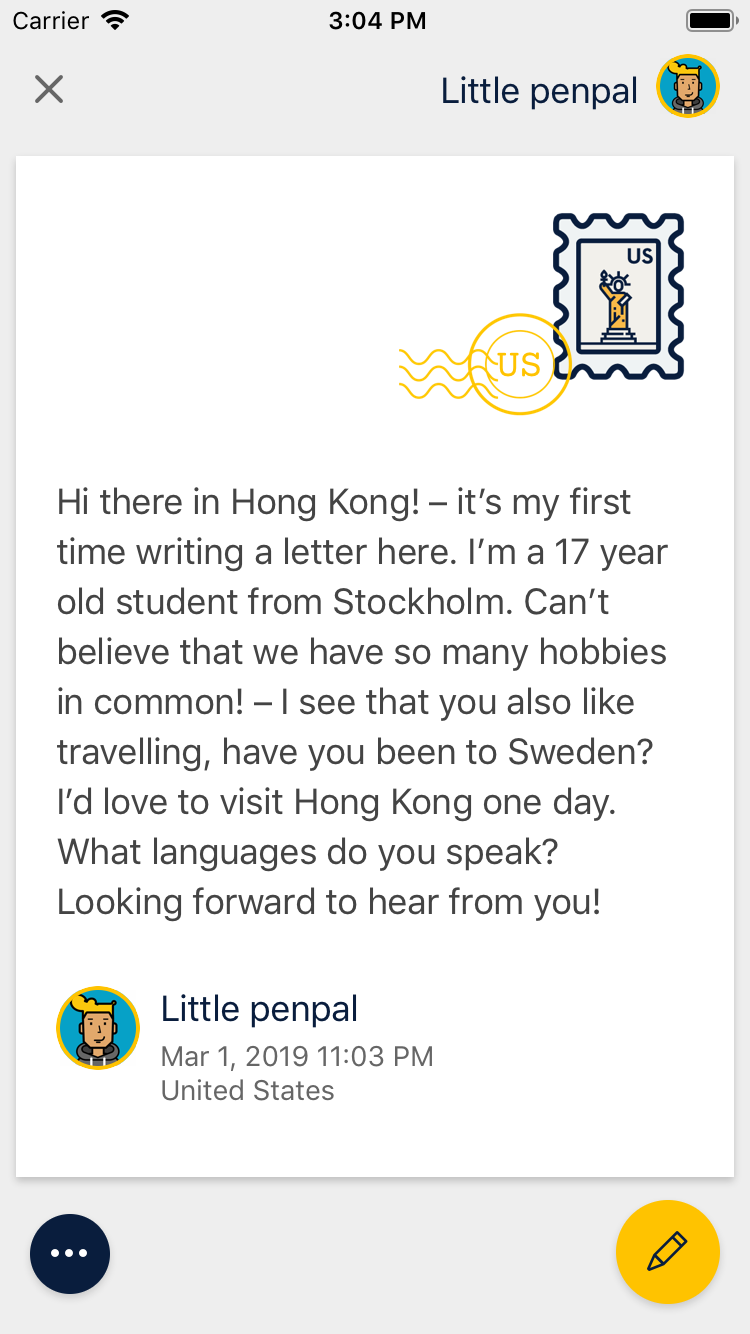
Slowly: written practice with global penpals
Slowly
Less about speaking, great for writing. A nice complement when you want to practice composing English thoughtfully.
Best for: written fluency and reflection.
Why voice messaging lowers the stakes
Live calls are the deep end: you have to understand, think, and respond in real time, and the fear of freezing keeps a lot of learners silent. Voice messages let you wade in. You can listen as many times as you need, gather your thoughts, record, and re-record until you're happy. Over time that confidence transfers, and live conversation stops feeling like a cliff edge.
How to keep a speaking partner long-term
- Lead with the person rather than the grammar. Ask about their life; the language follows.
- Keep a gentle rhythm. A voice message every day or two beats an intense session that burns out.
- Correct on request only. Nobody enjoys being graded mid-story.
- Share something real. Vulnerability is what turns a "partner" into a friend who sticks around.
Final thoughts
Use AI to drill and prepare. The progress that sticks tends to come from practising with people. If formal language exchanges have felt like homework that fizzles, try flipping the order: make a friend first and let the English come along for the ride. A voice-first app like Bubblic keeps that low-pressure, and surprisingly fun.