
Best Language Partner Apps for Real Conversations
Language practice works best when the conversation feels alive.
A good language partner app should help you speak with real people, not only correct sentences. The best conversations teach language and culture at the same time.
Bubblic is not a classroom app, but it can be a strong companion for people who want to build confidence through real voice conversations.
The right language partner app depends on whether you want grammar feedback, native-speaker matching, paid lessons, casual speaking confidence, or international friendship. Those needs overlap, but they are not identical.
Best language partner apps by need
| Need | Best fit | Why |
|---|---|---|
| Natural voice confidence | Bubblic | Voice-first prompts help you practice expressing real thoughts without live-call pressure. |
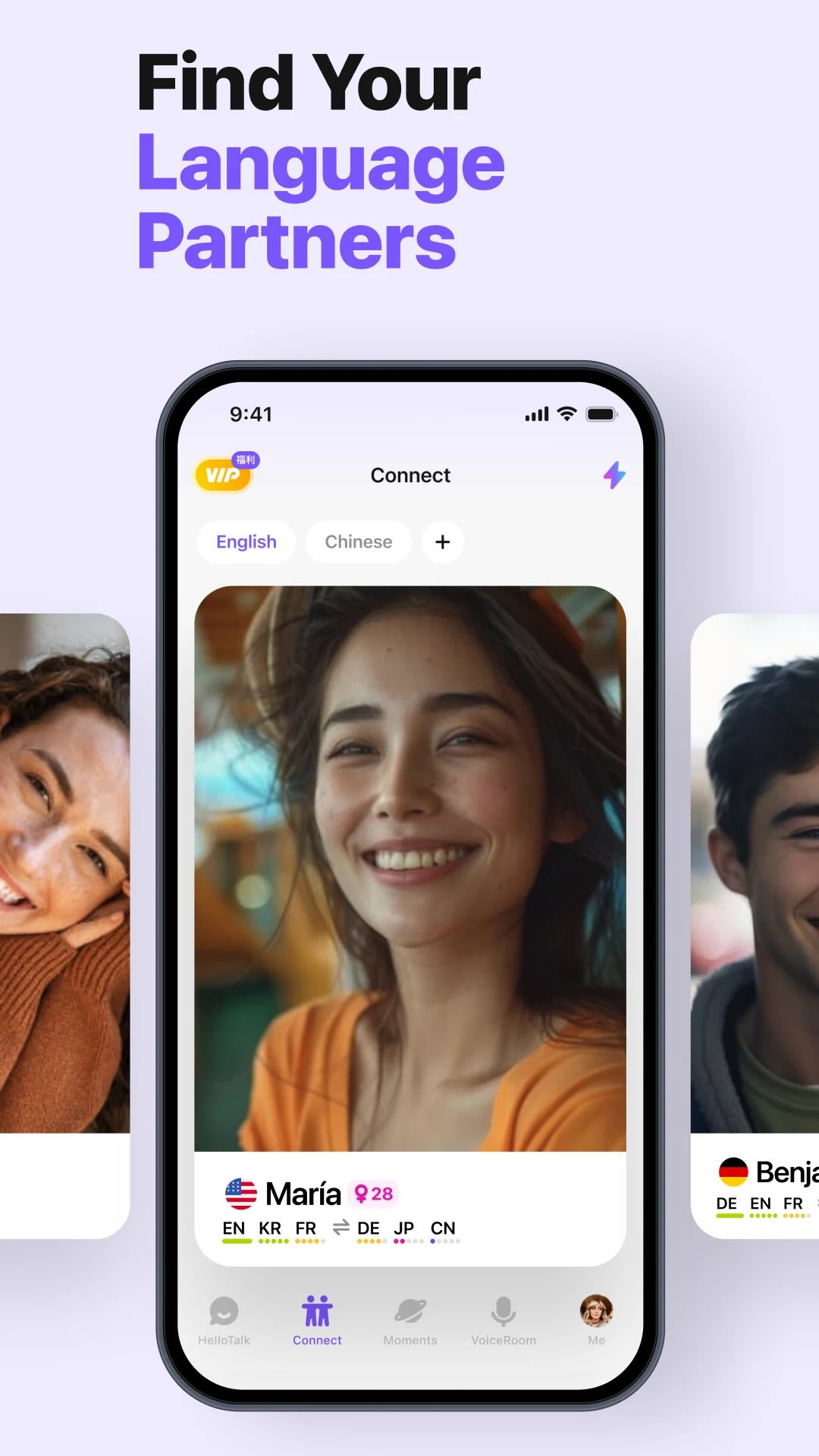
| Correction and native-speaker exchange | HelloTalk | HelloTalk emphasizes native-speaker practice, translation, instant captions, livestreams, and Voicerooms in its App Store listing. |
| Structured partner matching | Tandem | Tandem focuses on finding language exchange partners by language, location, interests, and more. |
| Formal lessons | Tutoring platforms | Scheduled teachers are better when you need curriculum, accountability, or exam prep. |
| Writing practice | Penpal-style apps | Long messages help with composition, patience, and cultural exchange. |
If you only want corrections, use a dedicated language exchange app. If you want to stop freezing when you speak, add a voice-first social app. Many learners do not fail because they lack vocabulary. They freeze because real people make the language feel emotionally high stakes.
1. Bubblic: best for real voice confidence
Bubblic is not a traditional language exchange classroom. It is a voice friendship app where you can meet people around the world, answer thoughtful prompts, and practice saying real things out loud. That makes it useful for the emotional side of language learning: confidence, rhythm, listening, and comfort.
If live calls make you anxious, asynchronous voice is a gentler step. You can record, pause, listen back, and send when ready. You still get the benefit of speaking to a human, but without the panic of filling every silence in real time.
Bubblic works best as a companion to correction tools. Use language exchange apps for grammar and vocabulary feedback. Use Bubblic to practice being yourself in another language.
2. HelloTalk and Tandem: best for exchange structure
HelloTalk is a strong choice when you want a large language-learning environment. Its App Store listing says it connects users with native speakers and offers translation, instant captions, livestreams, and Voicerooms. That makes it especially useful when you want help getting through a conversation in your target language.
Tandem is also a direct language exchange fit. Its official site describes a community where people teach each other, search for partners by language, location, and interests, and use text, voice notes, audio or video calls, corrections, and translation tools.
The advantage of these apps is structure. The limitation is that the conversation can sometimes become transactional. When every chat begins with language goals, it can be harder to let a friendship breathe.
The best setup is often a stack
For most learners, the best language partner app is not one app. It is a small stack. Use one tool for corrections, one for voice confidence, and one for deeper friendship if you want the language to become part of your real life.
- Use HelloTalk or Tandem when you need explicit exchange, correction, or language matching.
- Use Bubblic when you want to speak naturally about life, culture, loneliness, work, dreams, and friendship.
- Use tutoring platforms when you need lessons or exam preparation.
- Use penpal-style apps when you want longer writing practice.
This removes pressure from each app. Bubblic does not need to become your grammar teacher. HelloTalk or Tandem do not need to become your entire social life. Each tool can do the job it is best at.
How to choose a language partner app
- Decide whether you need correction, confidence, friendship, or lessons first.
- Pick an app whose design rewards that outcome.
- Avoid judging success by message volume alone. Ten shallow chats can teach less than one thoughtful exchange.
- Use voice sooner than feels comfortable, but choose asynchronous voice if live calls feel too intense.
- Keep the relationship mutual. Help the other person with their goals too.
The best language partner is not just a native speaker. It is someone who is patient, curious, and interested enough to return. Apps can introduce you, but the friendship grows through repeated, generous conversation.
Practice with real voices
Use Bubblic when you want language practice to feel like talking to a thoughtful person, not completing a worksheet.
What language apps often miss
Many language apps solve the mechanical problem: find a native speaker, translate a phrase, correct a sentence, schedule a lesson. Those tools matter. But speaking a language is also emotional. You have to tolerate sounding younger than you are, losing nuance, making mistakes, and letting another person hear your unfinished self.
That is where voice-first friendship can help. Bubblic does not replace corrections, but it gives learners a place to practice the social courage of speaking. You are not only producing correct sentences. You are explaining a memory, reacting to a story, asking a real question, and learning to stay present while imperfect.
For advanced beginners and intermediate learners, this can be the missing bridge. You may know enough words to communicate, but still avoid real conversations because the emotional pressure is high. Asynchronous voice lowers that pressure without removing the human listener.
Better first messages for language partners
The usual first message, "Hi, can we practice?" is clear, but not very memorable. A better opener gives the other person a reason to answer as a human being. It can still mention language practice, but it should include personality.
- "I am trying to get more comfortable telling stories in English. What is a small story from your week?"
- "I can help with English, but I also want to learn how people actually talk with close friends. What phrase do you use all the time?"
- "I freeze during live calls, so I am starting with voice notes. What topic makes conversation easy for you?"
- "What is one thing in your language that feels impossible to translate perfectly?"
These openers work because they are specific. They make practice feel like a conversation rather than a task request.
How to measure progress with language partners
Do not measure progress only by corrections received. A good language partner app should help you become more willing to start, continue, and return to conversations. If you speak more often, recover from mistakes faster, and understand more natural speech, you are making progress.
For Bubblic, the progress signal is social confidence. Can you tell a short story by voice? Can you ask a follow-up question? Can you reply to someone from another country without rehearsing every word? Those are real language milestones even if no one marks them with red ink.
| Progress signal | What it means |
|---|---|
| You send voice notes more often | Speaking feels less threatening. |
| You ask better follow-up questions | You are listening for meaning, not only vocabulary. |
| You recover after mistakes | You are building conversational resilience. |
| You talk about real topics | The language is becoming part of your life. |
Language partner red flags
A language partner should not make you feel used, mocked, or pressured. Be cautious if someone ignores your goals, turns every exchange into flirting, asks for money, or expects you to teach for free without giving anything back. Mutuality is the point.
A good partner is patient enough to let you be imperfect and curious enough to show up as a person too. That is why apps with clear intent matter: they shape what people think the relationship is for.
Best overall recommendation
Use a dedicated language exchange app when you need correction, then use Bubblic when you need the human courage to speak. That combination covers the two sides of language learning: accuracy and presence. The more advanced you become, the more important presence becomes.
A language becomes yours when you can use it with a real person and still feel like yourself.
That is why the best language partner stack should train both skill and ease.
When both improve together, you are more likely to keep showing up long enough for the language and the friendship to grow.
Try Bubblic for voice-first friendship
Answer one thoughtful question, listen to real voices from real places, and reply when a conversation feels human.
FAQ
What is the best language partner app?
HelloTalk and Tandem are strong for structured exchange. Bubblic is a strong companion when you want voice confidence and international friendship.
Does Bubblic have translation tools?
Bubblic includes transcripts for voice messages, but it is not primarily a translation or tutoring app.
Can I find native speakers on Bubblic?
You can meet people around the world, but matching is designed for connection rather than strict teacher-student exchange.
Should I use Bubblic instead of HelloTalk or Tandem?
Use Bubblic alongside them if you want correction tools plus more natural voice friendship.