
Best Apps to Talk to People When You're Feeling Lonely (2026)

There's a specific kind of loneliness that hits when your phone is full of contacts but there's no one you actually want to talk to. You scroll, you double-tap a few things, maybe you watch a stranger's story, and somehow you feel emptier than before you picked it up.
If that's you right now, reaching for an app is a reasonable instinct. The catch is that most apps are built to hold your attention rather than keep you company. This guide covers the handful designed for talking to people, and which one fits the kind of loneliness you're feeling tonight.
Why scrolling makes loneliness worse
Feeds are designed around broadcast: one person performs, and thousands watch. Watching other people's highlight reels triggers social comparison without any of the back-and-forth that relieves loneliness. You get the sensation of being near people without the experience of being with anyone. What helps is almost the reverse: one exchange, however small, with a person who responds to you specifically.
"Chat app" vs. a real friendship app
A chat app hands you a text box and wishes you luck. A friendship app gives you a reason and a way to keep talking: a prompt to break the ice, a format that carries some warmth, and pacing that doesn't demand you be "on" around the clock. What separates them usually comes down to:
- Voice. Hearing a laugh or a pause builds trust faster than any number of texts.
- Prompts. You never have to invent "hey, what's up" out of thin air.
- Depth over volume. One good conversation beats fifty dead matches.
The apps, ranked by how they help
1. Bubblic: voice-first, prompt-led, no photos
Bubblic
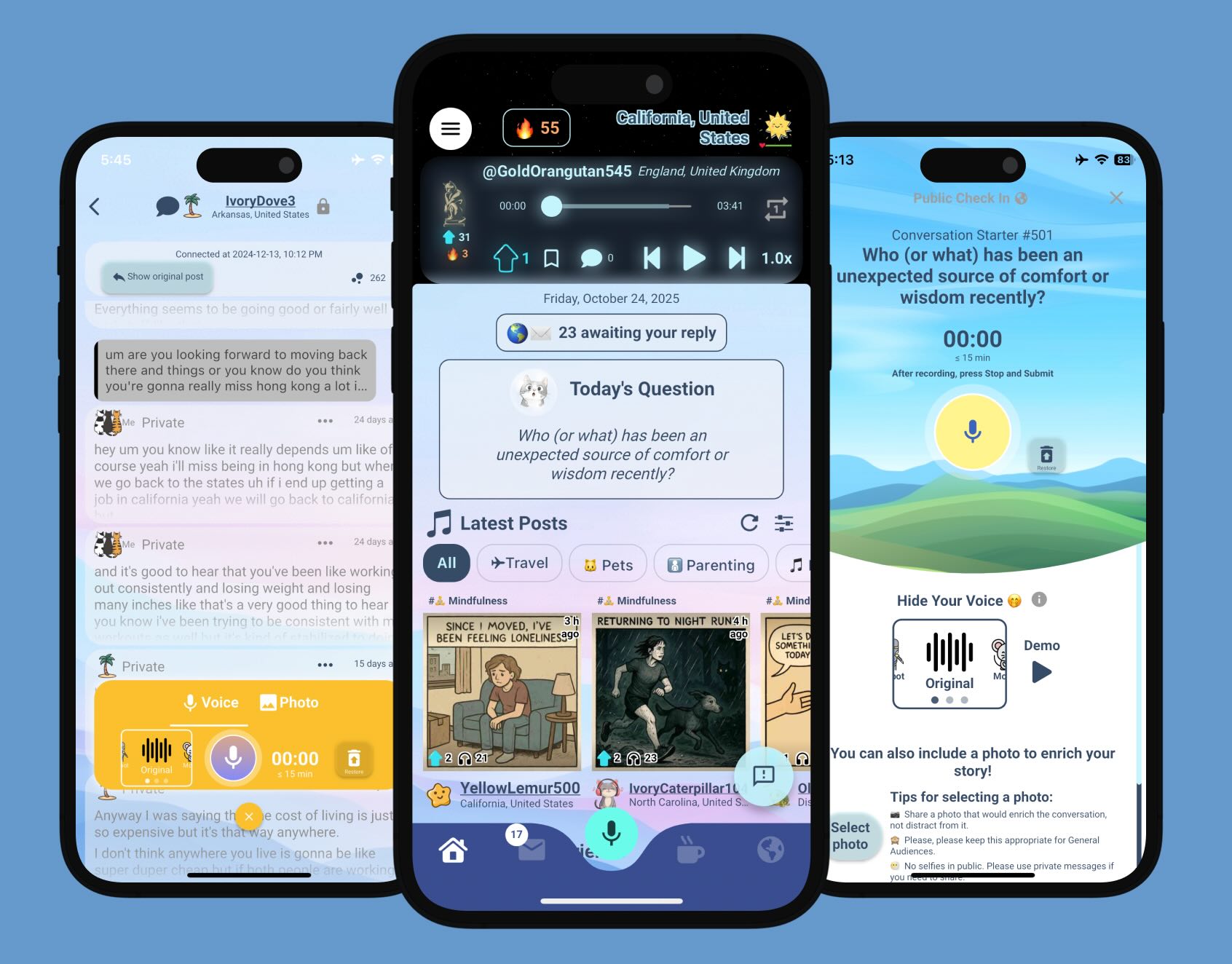
Bubblic is built for exactly this moment. Instead of swiping through faces, you send and receive short voice messages, often kicked off by a daily prompt so you're never staring at a blank screen. Because there are no profile photos, the connection starts from how someone thinks and sounds rather than how they look. It's especially kind to introverts and night owls: you can record a thought at 2 a.m. and someone across the world picks it up when they wake.
Best for: deep one-on-one connection when you want to be heard instead of performed at.
2. Slowly: penpals, paced on purpose
Slowly
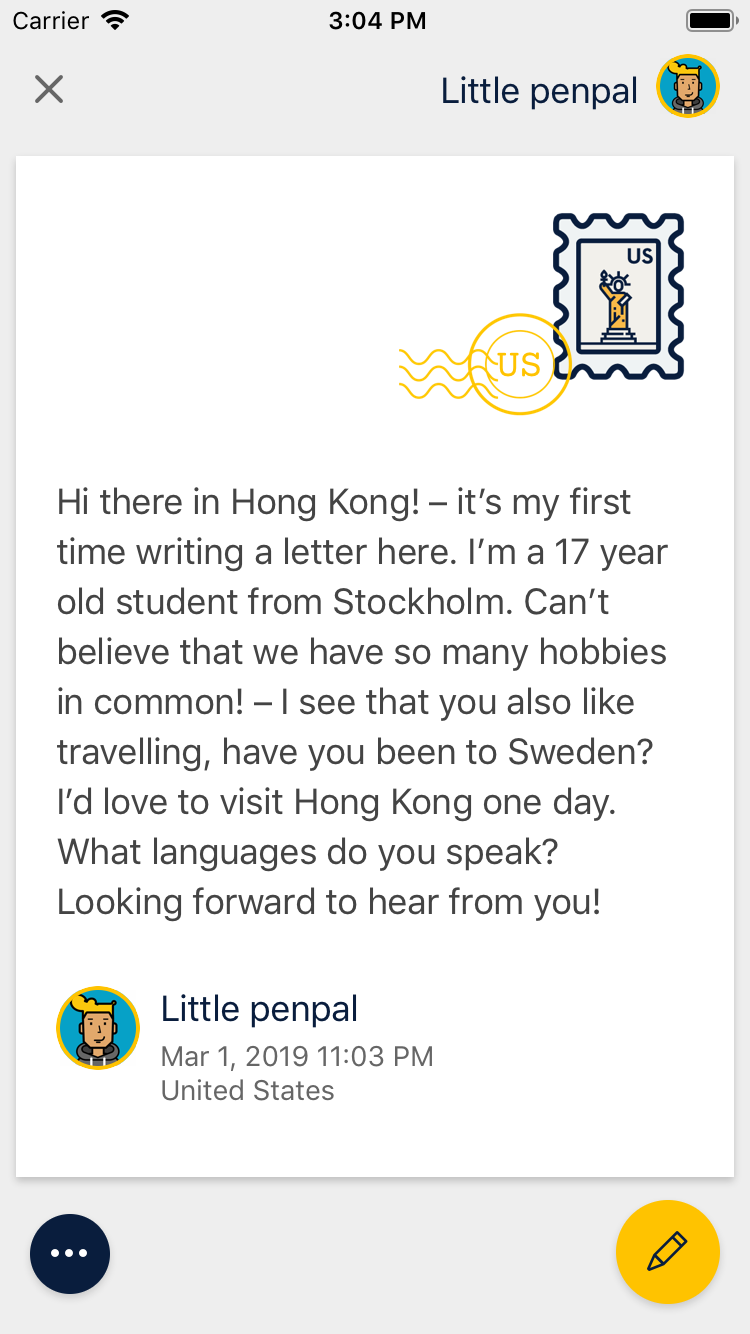
Slowly mimics real letters: messages take "travel time" to arrive based on distance. The slowness is the point. It removes the pressure to reply instantly and attracts people who like to write thoughtfully.
Best for: reflective, written connection without urgency.
3. Bumble BFF: swiping, but for friends
Bumble BFF
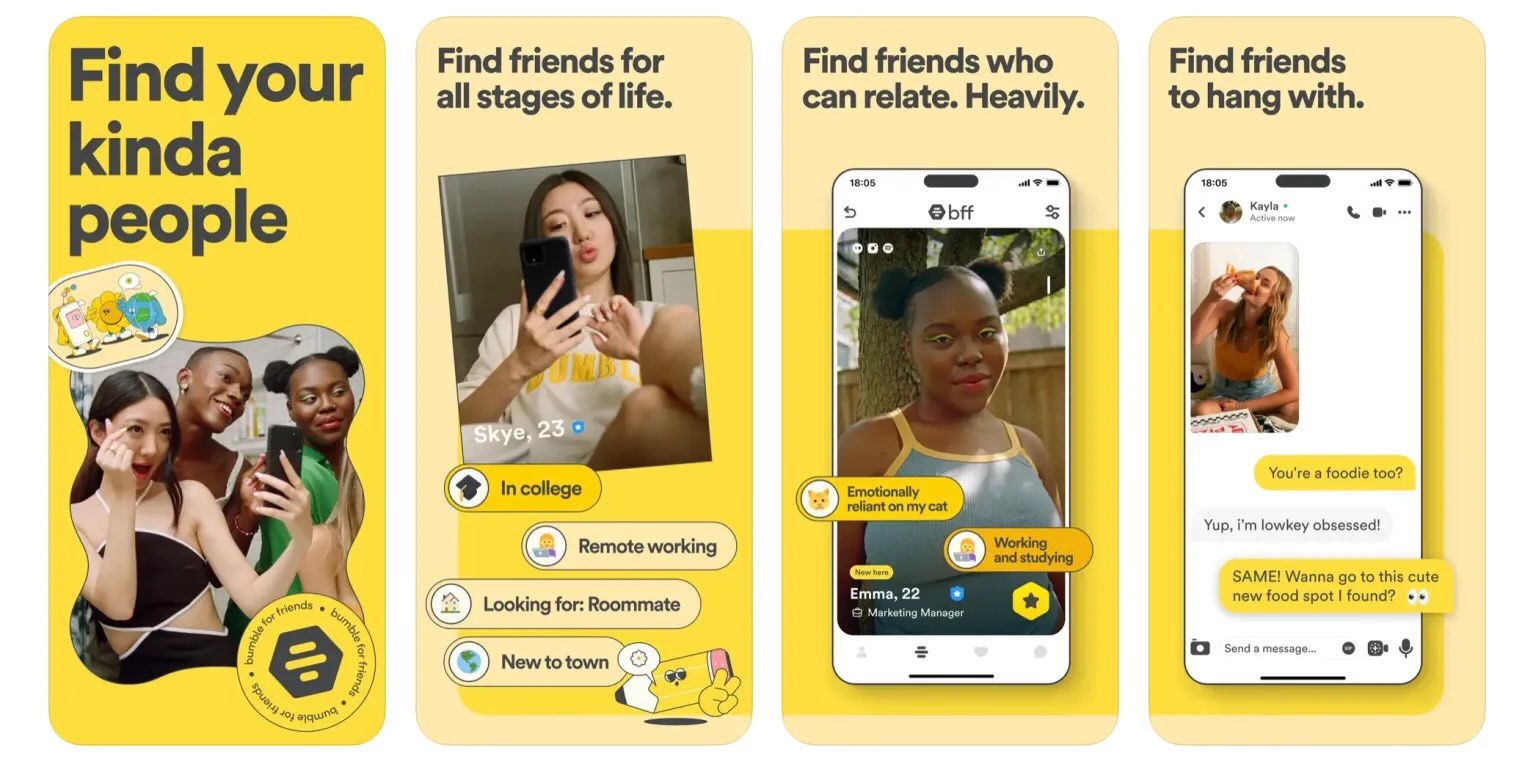
A friend-finding mode layered on a familiar swiping interface. Good reach in big cities, though it inherits the cold, photo-first dynamics of dating apps.
Best for: finding local friends to eventually meet up with.
4. Wakie: quick spoken conversations
Built around short live voice chats with strangers. Lower stakes, higher novelty, great for a quick hit of human contact but less so for building something lasting.
Best for: an immediate "talk to someone right now" fix.
How each handles the cold-start problem
The hardest moment is the first one: you open an app, and then what? Each handles that opening differently:
- Bubblic: hands you a daily prompt, so the first message is already half-written for you.
- Slowly: matches on shared interests, then you write a letter, with no live pressure.
- Bumble BFF: you swipe and wait for a match before any talking happens.
- Wakie: drops you straight into a live chat (fastest, but most jarring).
Which app fits you
- If you're an introvert: Bubblic or Slowly, since async means you're never put on the spot.
- If you're an expat or far from home: Bubblic (global, time-zone friendly) or Slowly.
- If you're a night owl: Bubblic, so you can record now and connect whenever they're up.
- If you want to meet up locally soon: Bumble BFF.
- If you just need to hear a voice this minute: Wakie.
Final thoughts
No app lifts loneliness on its own. What helps is a single exchange that reminds you connection is still within reach. Pick whichever one lowers the barrier enough for you to start. And if it's the blank screen that's been stopping you, a prompt-led, voice-first app like Bubblic is an easy place to begin.